






























The 50-Year Mortgage: True Fix or False Salvation?

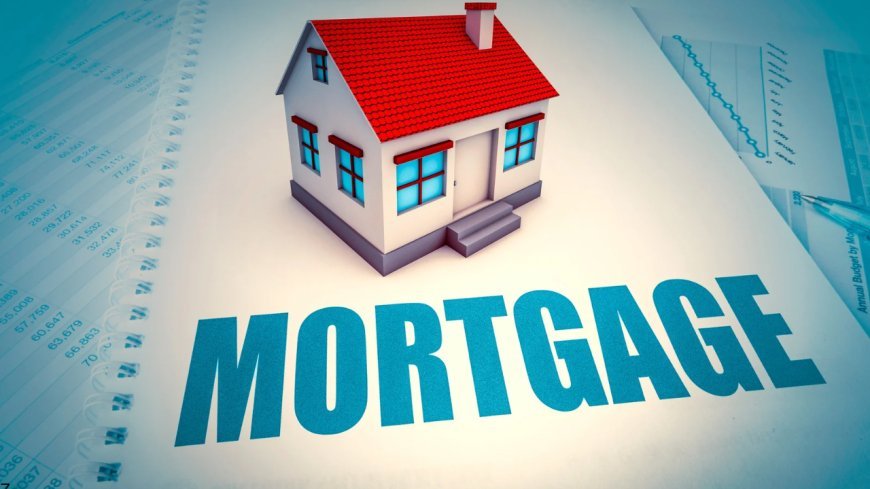
For decades, the 30-year fixed-rate mortgage defined the American Dream. It was more than a loan; it was a social contract, a predictable, stable climb from renter to owner, a vehicle for middle-class wealth creation. Families built equity, paid off their homes around retirement, and passed that asset to their children. Today, that framework has shattered. With median home prices soaring past $450,000 and persistent interest rates hovering near 7%, the rungs of that ladder have snapped for millions. The "starter home" is now an endangered species.
Into this affordability crisis, lenders now push the 50-year mortgage as a desperate lifeline. It’s marketed with seductive promises of lower monthly payments and the creation of “generational equity.” Yet beneath the glossy brochures and helpful-sounding loan officers lies a much deeper, more troubling question: is this financial innovation a genuine bridge to homeownership, or is it a carefully constructed trap that cements debt across entire lifetimes?
The appeal is immediate and visceral. Consider a $400,000 loan at a 7.5% interest rate. A traditional 30-year term demands a monthly principal-and-interest payment of $2,661. The 50-year version, however, drops that payment to just $2,120. That $541 in monthly savings feels like oxygen for a family stretched to the breaking point by childcare, groceries, student loans, and car notes. For a household earning $90,000, that $541 is often the critical difference. The 30-year loan’s payment puts their debt-to-income (DTI) ratio too high for approval; the 50-year loan squeaks them just under the wire. Lenders frame it as empowerment, as the only way to qualify at all.
The Pitch: “Own” a Home for Less Per Month
The math, on the surface, is seductive. The marketing targets the anxieties of a generation locked out of the market. The same $400,000 home becomes financially reachable with a monthly payment that rivals, or is sometimes even less than, the rent on a comparable property. This product is sold as the ultimate flexible tool for millennials and Gen Z, allowing them to juggle stagnant wages and historic student debt while finally "getting on the ladder."
Some of these products even include so-called “heirloom clauses,” a novel feature allowing the remaining loan balance to transfer tax-free to an heir upon the borrower's death. It’s all packaged as a forward-thinking solution: buy now, stop "throwing money away on rent," build equity (however slowly), and pass a tangible asset to your children.
But this perceived savings comes at a brutal, almost incomprehensible cost. Over the full 50-year term of that $400,000 loan, the total interest paid balloons to a staggering $1,036,000. For comparison, the 30-year loan would have cost $557,960 in total interest. By opting for the "affordable" 50-year term, the borrower pays an additional $478,000—more than the entire original price of the house—just for the privilege of 20 more years of payments.
You are not buying a house; you are signing a $1.436 million contract to lease money from a bank for half a century. Proponents argue that inflation will soften this blow over five decades, but that assumes wages will consistently keep pace, a gamble that has failed millions of workers over the last 20 years.
The Trap: You’re Renting from the Bank for Half a Century
The most pernicious aspect of this loan is how equity accumulates: at a glacial, almost imperceptible crawl. On that $2,120 monthly payment, roughly $2,100 goes directly to interest in the first month. In the first decade of homeownership—after paying a total of $254,400 to the bank—the borrower will have reduced their $400,000 principal by only about $15,500. A 30-year borrower, by contrast, would have paid off over $58,000 in the same period.
This lack of equity is a trap. Homeowners in their 30s won’t see meaningful ownership—enough to borrow against for a college fund or a new roof—until they are in their 60s, if they even keep the property that long. One job loss, one medical crisis, or one necessary cross-country move, and the "asset" becomes an immovable liability. You cannot sell when you have no equity; closing costs alone would leave you underwater, owing money just to leave.
A modest recession exposes this fragility instantly. A 10% drop in home values—a $40,000 loss on paper—plunges the 50-year borrower deep underwater for decades, as they've only built $15,500 in equity after 10 years. Refinancing to a better rate becomes impossible. And the promised generational wealth? The "heirloom clause" is a cruel joke. Most heirs will not inherit a home; they will inherit a $350,000 liability at a 7.5% interest rate, with 25 years of payments still due. Their only option is an immediate fire sale, with the proceeds going directly to the bank. The bank collects, either way.
Who Benefits? (Spoiler: Not You)
Wall Street salivates at the prospect of these loans. Longer loan terms mean fatter, more predictable interest streams. These 600-month payment streams are perfect for bundling into new, complex mortgage-backed securities—perhaps dubbed “Housing Eternity Bonds” by 2027—to be sold to pension funds and global investors craving "stable, long-duration returns."
Builders and flippers also cheer, as this inflated borrowing power acts as a high-octane accelerant for home prices. It props up an unsustainable market by finding new ways to qualify buyers at inflated prices, solving none of the underlying supply shortages. Boomers with existing equity can cash out at these peak prices, shifting the structural burden downstream.
The borrower, meanwhile, trades catastrophic long-term financial obligation for desperate short-term relief. It’s not ownership—it’s a subscription to shelter, with the fine print written in the inescapable ink of compound interest. It's a neo-feudal arrangement where "owning" just means you are responsible for the plumbing and property taxes while the bank holds the deed for life.
The Real Fix Isn’t Longer Loans—It’s Shorter Supply Chains
Extending debt doesn’t solve scarcity; it only masks the symptoms while enriching the lenders. True affordability demands a structural overhaul of the housing market. The problem is not that loan terms are too short; it's that we have not built enough of the right kind of homes.
Real solutions require policy courage:
-
Legalize "Missing Middle" Housing: End restrictive single-family-only zoning to allow duplexes, triplexes, and townhomes to be built in existing neighborhoods.
-
Tax Vacant Land: Implement land-value taxes that heavily penalize investors for sitting on vacant, undeveloped land in urban cores, forcing them to build or sell.
-
End Sprawl Subsidies: Stop using public funds to subsidize the infrastructure for inefficient, car-dependent suburbs.
Finland proved this is possible. Its state-subsidized "Aso" housing system and the widespread use of 99-year municipal land leases—where you own the building but rent the land—kept Helsinki prices rising just 20% in real terms since 2000. The U.S. figure in that same period? 120%.
Until policy catches up to reality, no loan term—50 years or 500—will make housing a path to prosperity. The 50-year mortgage isn't a ladder; it's a treadmill. It keeps you running in place for half a century while the bank siphons off your wealth.
Prosperity isn’t inherited. It’s built. And right now, we’re mortgaging the future to pretend otherwise.
What's Your Reaction?
 Like
0
Like
0
 Dislike
0
Dislike
0
 Love
0
Love
0
 Funny
0
Funny
0
 Angry
0
Angry
0
 Sad
0
Sad
0
 Wow
0
Wow
0